
There are two ways to get stung buying Pokémon cards. You buy a fake: a card or pack that Pokémon never made. Or you buy a reseal: a real pack or box that someone opened, took the best cards out of, and closed back up to sell as new.
Both are easier to spot than you'd think once you know where to look. Here are the checks that actually work, in the order we'd do them.
Part 1: Spotting a fake Pokémon card
1. Turn it over and check the back
The back is the quickest tell. A real English card back is a deep, dark blue. Fakes are often too pale, too dark or a bit purple. Look at the swirl just above and to the right of the Poké Ball: on a real card it's a mix of lighter and darker blue, while fakes tend to print it as a flat, even colour.
Tip: you're much better at spotting a difference than judging a colour on its own. Hold the card next to a common card you pulled from a pack yourself, under the same light.
2. Look at the edge
A real Pokémon card is made of layers, with a thin black layer in the middle between two white layers. Hold the card edge-on under a good light (a phone torch and the zoom on your camera help) and you should see a dark line running through the middle. Cheap fakes don't have it.
You'll hear about the "rip test", where you tear a card to look for the black layer. It works, but it destroys the card, and the edge check shows you the same thing.
3. Read the card
Fakes often get the small stuff wrong:
- The é in Pokémon. Every real card has the accent. A missing é is a giveaway.
- Spelling and wording. Typos, odd grammar, or text copied from a different card.
- The font. Text that looks too bold, too thin, or oddly spaced compared with a real card.
- Energy symbols. Off-centre, the wrong size, or the wrong colour.
- The card number and copyright line. A card number that doesn't exist in that set, or a missing or wrong copyright line at the bottom.
- Wrong details. An attack or a card number the real card never had. Look the card up and compare.
4. Check the shine and the feel
Real cards have a controlled gloss. Fakes are often too shiny or feel slippery. On holo cards, the foil pattern should match other cards of the same rarity from the same set; fakes often use a generic sparkle.
5. The light test: use it to reject, not to approve
Pokémon's own support page suggests holding a suspect card up to a bright light, because cheap fakes let light through. That still catches the worst ones. But Bulbapedia calls the light test unreliable, because the result depends on the light, and better fakes now copy the black middle layer. So: if light pours through, it's fake. If it doesn't, that alone doesn't prove it's real. Use two or three checks together.
Part 2: Spotting a resealed pack or box
Booster packs: check the crimps

The crimps are the ridged seals across the top and bottom of a pack. On a factory pack they're straight, even and the same depth all the way across. Warning signs:
- crimps that wander, slope or stop short of the edge
- two sets of crimp lines, or a seal that looks smooth, flat or melted
- shiny glue marks, or a back seam that's lifting or wrinkled
- a pack that's a little shorter than others from the same set (the old crimp was cut off and it was sealed again lower down)
- a wrapper that's creased or stretched near the ends, or feels loose
Boxes: check the wrap
On booster boxes, Elite Trainer Boxes and other sealed boxes, the plastic wrap carries most of the evidence:
- Tension. Factory wrap is tight and neat. Loose, baggy or badly wrinkled wrap is a warning.
- Seams. Factory seams are tidy. Thick, lumpy, melted-looking or doubled seams suggest someone rewrapped it with a heat gun.
- Logos on the wrap. Many booster boxes come in wrap printed with a repeating Pokémon or Poké Ball logo. If a product normally has printed wrap and yours is plain, or the logo looks blurry or different, be suspicious. Wrap can vary between products and print runs, so compare with photos of the same product.
- Glue, tape, cuts or cloudy melted patches anywhere on the wrap.
What about weighed packs?
On some older sets, packs with a holo card weighed a fraction more, so people used precise scales to pick out the heavy packs and sell the light ones. Collector guides say this is much less reliable on modern packs, but it's one more reason to be careful with loose packs from a stranger. A sealed box is much harder to search than a pile of loose packs.
One odd sign isn't proof
Factory packaging isn't perfectly uniform, so one strange crease can just be a quirk. Several signs together are a pattern. And if something's priced well below what everyone else is charging, Pokémon's own advice is that it's probably too good to be true.
Part 3: What to do if you think you've been sold a fake
- Don't open it if it's still sealed, and keep the listing, receipt and messages.
- Film the opening if you do decide to open something expensive, from the moment you cut the wrap.
- Go back to the seller and ask for a refund. If they won't help, use the marketplace's buyer protection or your card provider.
- Report it. In England and Wales, Citizens Advice can pass your complaint to Trading Standards, who deal with businesses selling fakes (Advice Direct Scotland in Scotland, Consumerline in Northern Ireland). Trading Standards won't get your money back for you, but they can act against the seller.
The easiest way to avoid all of this
Pokémon says it gets the most reports of counterfeit sales from flea markets. Add loose packs from strangers and listings that look too cheap, and you've covered most of the risky places to buy.
So the simplest protection is where you buy. Buy sealed product from a proper shop with a real address, clear policies and a track record you can check.
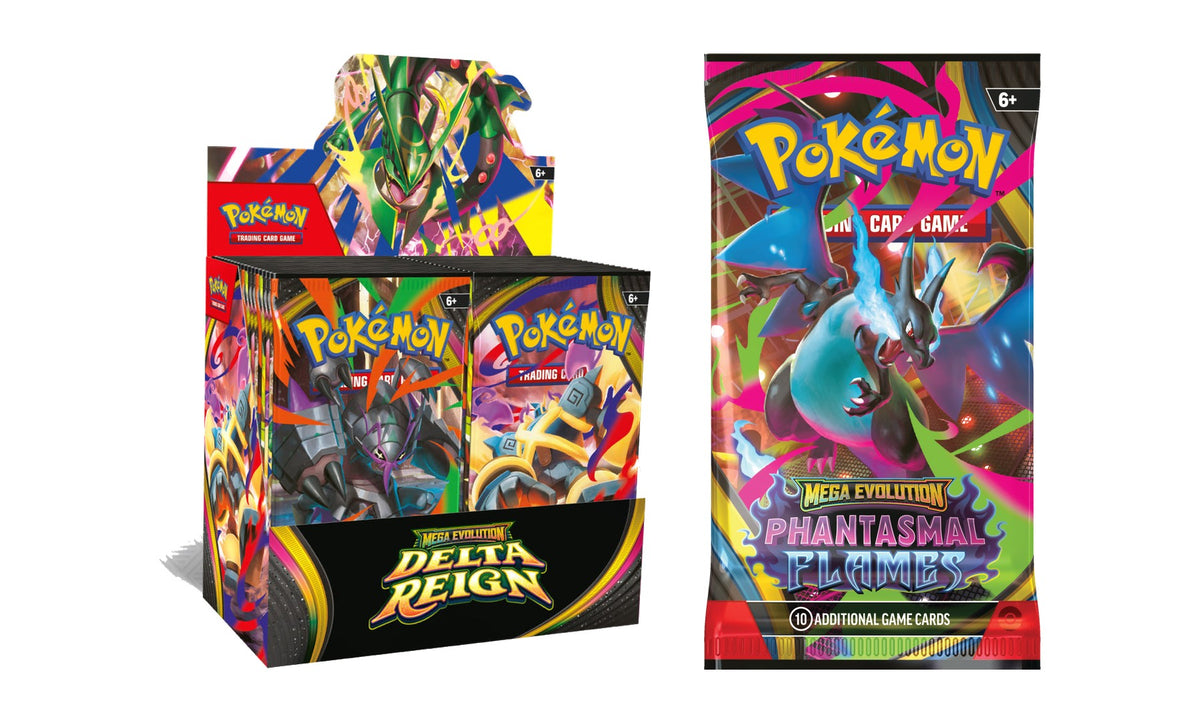
That's what we do at Poke Pop Up. We're a UK company, our sealed Pokémon is listed as factory sealed and shipped from the UK, and you can see our record for yourself: 100% positive feedback on eBay over the last 12 months. Browse our Pokémon sealed range, starting with the newest set, Delta Reign.
FAQ
What is the quickest way to tell if a Pokémon card is fake?
Check the back. A real card back is a deep, dark blue with a mix of light and dark blue in the swirl near the Poké Ball. Fakes are often pale, too dark or purple, with a flat swirl.
Does the light test work on Pokémon cards?
Only as a first filter. Cheap fakes let light through, but the result depends on the light and better fakes copy the black middle layer, so a card that passes isn't proven real. Combine it with other checks.
How do I know if a Pokémon booster pack has been resealed?
Look at the crimps at the top and bottom. Factory crimps are straight and even. Uneven or doubled crimps, glue marks, a lifting back seam or a shorter pack are warning signs.
How can I tell if a Pokémon booster box or ETB has been resealed?
Check the plastic wrap: it should be tight and neat with tidy seams. Loose or wrinkled wrap, melted or doubled seams, and plain wrap where the product normally has printed logos are red flags.
Where should I report fake Pokémon cards in the UK?
In England and Wales, report the seller to Trading Standards through Citizens Advice. In Scotland use Advice Direct Scotland, and in Northern Ireland use Consumerline.
Sources
- Pokémon Support, "Did I purchase fake or counterfeit cards?"
- Bulbapedia, "Counterfeit card"
- Ungraded, "How to Spot Fake Pokémon Cards"
- Cardmarket Help, "Spotting a Counterfeit"
- Paragn Network, "How to spot fake Pokémon cards", 15 Aug 2026
- TCG Comps, "How to Spot Resealed Pokémon Packs and Boxes", 4 Nov 2026
- Rip.fan, "How to Spot a Resealed Pokémon Pack or Box", 11 Oct 2026
- The Grail Hunt, "Buying Sealed Pokémon Product: How to Spot Reseals and Weighed Packs", 22 Jul 2026
- Citizens Advice, "Reporting to Trading Standards"
- GOV.UK, "Consumer rights"